


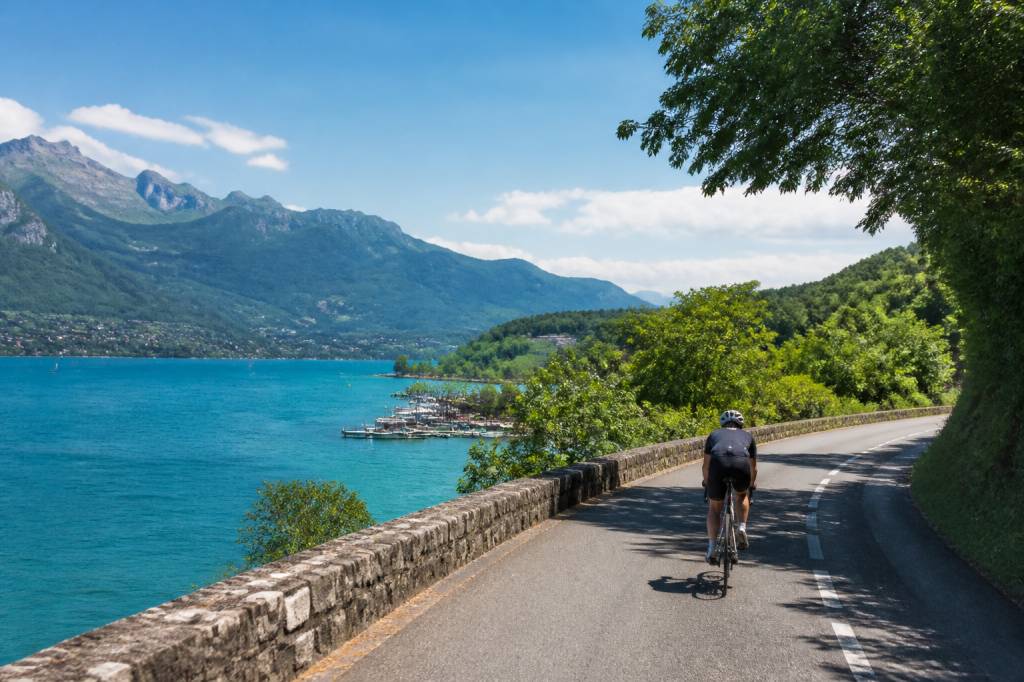
There are bike rides, and then there are bike rides that make you stop every few minutes to say, “Honestly, look at that view.” Cycling around Lake Annecy belongs firmly in the second category. With turquoise water, dramatic Alpine peaks, flower-filled villages and plenty of places to pause for coffee, it is one of France’s most beautiful rides—and one of the most enjoyable ways to explore the region.
The full loop is roughly 40 to 42 kilometres, depending on your route and detours. It is manageable for most reasonably active cyclists, especially if you allow a full day rather than trying to race around the lake. And why would you rush? This is a route designed for swimming stops, market browsing, lakeside lunches and photographs that will make everyone at home slightly jealous.
Whether you are planning a weekend in Annecy or adding the lake to a wider French escape, here is everything you need to know about cycling around Lake Annecy.
Why cycle around Lake Annecy?
Lake Annecy is often described as one of the cleanest lakes in Europe, and its famously clear water is one of the first things you notice. The lake is framed by the Semnoz, Tournette and Bauges mountains, creating a backdrop that feels almost too perfect to be real.
Cycling gives you the freedom to enjoy the scenery at your own pace. You can leave Annecy’s busy old town behind, pedal through peaceful lakeside villages and stop wherever the view catches your eye. There are beaches, picnic areas, bakeries, cafés and viewpoints along the way, so you are never far from a well-earned treat.
The route is also much more accessible than many Alpine cycling adventures. You do not need to be a professional cyclist or arrive with a wardrobe of Lycra. An everyday hybrid bike or electric bike is perfectly suitable for the majority of the loop. The main challenge is the distance, rather than steep climbing.
The best time to ride
Summer is the most popular season for cycling around Lake Annecy. From June to August, the weather is generally warm, the lake is inviting for a swim and the days are long. The downside is that the cycle path can become busy, particularly between Annecy and the eastern villages.
For a more relaxed experience, consider May, June or September. The temperatures are often comfortable for cycling, the landscape is still wonderfully green and there are fewer crowds. September is especially lovely: the water remains warm enough for a dip, while the roads and restaurants feel noticeably calmer.
Early morning is ideal during the warmer months. You will avoid the strongest heat, find it easier to hire a bike and enjoy softer light over the mountains. It also gives you a better chance of securing a table at a popular lakeside restaurant without having to perform a dramatic tour of every terrace.
Choosing your starting point
Annecy is the most convenient place to begin. The city has numerous bike-hire shops, easy access to the lake and plenty of cafés for a pre-ride breakfast. Starting near the Jardins de l’Europe or the Pont des Amours puts you close to the main lakeside cycle route.
You can also start from one of the villages around the lake. Talloires, Veyrier-du-Lac, Menthon-Saint-Bernard and Doussard are all useful alternatives, particularly if you are staying outside Annecy or would prefer a shorter ride.
Most visitors cycle clockwise from Annecy, heading first along the eastern shore. This side of the lake has an excellent dedicated cycle path for much of the route and takes you through some of the most celebrated scenery. Cycling anti-clockwise is equally possible, but the western shore includes more sections on shared roads, so clockwise is often the more straightforward choice for first-time riders.
The Annecy to Talloires section
Leaving Annecy, follow the lakeside route towards Veyrier-du-Lac. The first stretch is relatively easy and offers wonderful views across the water towards the mountains. The cycleway is popular with families, runners and walkers, so keep your speed sensible and give plenty of warning when overtaking.
Veyrier-du-Lac is an attractive first stop. The village is known for its beautiful waterfront setting and views towards the Tournette mountain. You can pause for coffee, refill your water bottle or find a lakeside spot for a quick snack.
Continue towards Menthon-Saint-Bernard, one of the prettiest villages on the route. The village is home to the striking Château de Menthon-Saint-Bernard, which appears to rise directly from the hillside. The castle has a storybook quality, complete with turrets and panoramic views, and it is well worth a detour if you have time.
From Menthon, the route continues towards Talloires. This is one of the most scenic sections of the entire ride. The lake becomes increasingly dramatic, with steep green slopes meeting the water and boats gliding across the surface. Talloires itself is an excellent place to stop for lunch, gelato or a swim.
If you have brought a picnic, the lakeside beaches around Talloires are perfect for a long break. If not, there are restaurants and cafés where you can enjoy local specialities. Expect regional cheeses, fresh salads, fish from nearby waters and, naturally, desserts that make cycling feel like a very sensible lifestyle choice.
From Talloires to Doussard
The route south from Talloires is quieter and feels more rural. You will pass through or near Vérel, Angon and other small lakeside communities, with several opportunities to stop and admire the views.
One particularly worthwhile detour is the Angon waterfall. It requires leaving the main cycle route and walking part of the way, so it is not a quick roadside stop, but the waterfall and surrounding gorge are beautiful. Wear proper shoes if you decide to visit; flip-flops and uneven Alpine paths are not the best combination.
As you approach Doussard, the landscape opens out. This southern end of the lake has a calmer, more natural atmosphere and is close to the Bout-du-Lac nature reserve. The reserve is a lovely place for a gentle walk among wetlands, woodland and birdlife. It is also a good reminder that Lake Annecy is more than a photogenic backdrop—it is an important natural environment.
Doussard is generally considered the southern end of the main loop. It is a useful rest point, with cafés, shops and places to top up your supplies before tackling the western shore.
Returning along the western shore
The western side of the lake has a slightly different character. Some sections use dedicated cycle paths, while others involve roads shared with traffic. The route is still beautiful, but it requires more concentration than the eastern shore.
From Doussard, you will pass through villages including Lathuile, Duingt and Saint-Jorioz. Duingt is especially memorable, with its castle-like Château Ruphy set on a small peninsula. The village has a lovely waterfront and is a tempting place to stop for photographs or a quiet drink.
Saint-Jorioz is another popular break point. It has a sandy beach, clear swimming areas and facilities that make it convenient for families. On a warm afternoon, you may find it difficult to persuade yourself to get back on the bike. This is not a personal failure; it is simply evidence that the lake is doing its job.
Further north, the route heads towards Sévrier before returning to Annecy. This final stretch can feel busier, particularly during the summer, but the views remain spectacular. You will eventually arrive back at the city, where the old town’s canals, colourful buildings and lively terraces provide the perfect reward.
How difficult is the route?
The full circuit is usually described as easy to moderate. The main cycleway is largely smooth and accessible, with gentle gradients rather than long, punishing climbs. However, 40 kilometres is still a significant distance if you are not used to cycling.
Allow at least four to five hours of riding time, and preferably a full day once you include meals, swimming, sightseeing and photo stops. Families with older children may enjoy the route, but younger cyclists might prefer a shorter out-and-back ride from Annecy or a section based around one of the beaches.
An electric bike is a particularly good option if you want to enjoy the scenery without worrying about tired legs. It is also useful if you plan to add detours to viewpoints, villages or the château. Book ahead during school holidays and summer weekends, as e-bikes are often the first to disappear from rental shops.
What to take with you
A little preparation makes the day much more enjoyable. Even in warm weather, conditions can change quickly around the mountains, so pack more than just sunglasses and enthusiasm.
- Water and a few snacks, particularly if you plan to cycle outside peak café hours.
- Sun cream, sunglasses and a lightweight hat.
- A light waterproof jacket for sudden Alpine showers.
- Swimwear and a small towel if you want to swim.
- A phone or camera, because the views are genuinely exceptional.
- A small repair kit and a lock, especially if you are hiring a bike.
- Comfortable clothing and shoes suitable for both cycling and walking.
Bring a reusable water bottle and refill it whenever you can. Avoid leaving bags unattended at beaches or busy tourist spots, and remember that cycle paths are shared spaces. A bell, a little patience and a sensible pace will make the ride more pleasant for everyone.
Where to eat and stop
Annecy is packed with places to eat before or after your ride. Start with coffee and a pastry in the old town, or pick up picnic supplies from a market or local food shop. Fresh bread, fruit, cheese and a few pastries make an excellent lakeside lunch.
Talloires is ideal for a more leisurely restaurant meal, while Saint-Jorioz and Sévrier offer convenient cafés and snack stops. In Doussard, you can stock up before the western return route. Opening hours can vary outside the main season, so check ahead if you are cycling in spring or autumn.
If you are celebrating a special occasion, consider booking a restaurant with a terrace overlooking the lake. There is something rather satisfying about arriving by bike, ordering a chilled drink and admiring the route you have just completed.
Useful tips for a smoother day
Check the weather before setting off, particularly if you are planning to ride in the mountains during shoulder season. Heavy rain can make the shared-road sections less comfortable, while hot weather makes regular water breaks essential.
Keep right on cycle paths and slow down near bends, crossings and crowded waterfronts. Some stretches are used by children and inexperienced riders, so overtaking carefully is far more stylish than arriving at your destination three minutes earlier.
If the full loop sounds too ambitious, take a bus or taxi part of the way and cycle a shorter section. Boat services can also be useful for combining sightseeing with cycling, although bike spaces may be limited and seasonal. Check current timetables and bicycle policies before relying on this option.
Finally, do not plan every minute. Lake Annecy rewards spontaneity. Stop at the beach that looks inviting, explore a village lane, buy something delicious from a bakery or sit quietly beneath the mountains for ten minutes. The route is beautiful, but the best memories often happen between the planned stops.
The perfect Alpine day out
Cycling around Lake Annecy is scenic without being intimidating, active without feeling like hard work and flexible enough to suit different travel styles. You can treat it as a sporty challenge, a relaxed family outing, a food-focused day or simply a beautiful way to see one of France’s most captivating destinations.
Start early, hire a comfortable bike, leave room for a swim and prepare to stop often. By the time you return to Annecy, you will have covered a remarkable stretch of lakeside landscape—and probably started planning your next visit before you have even parked the bike.