


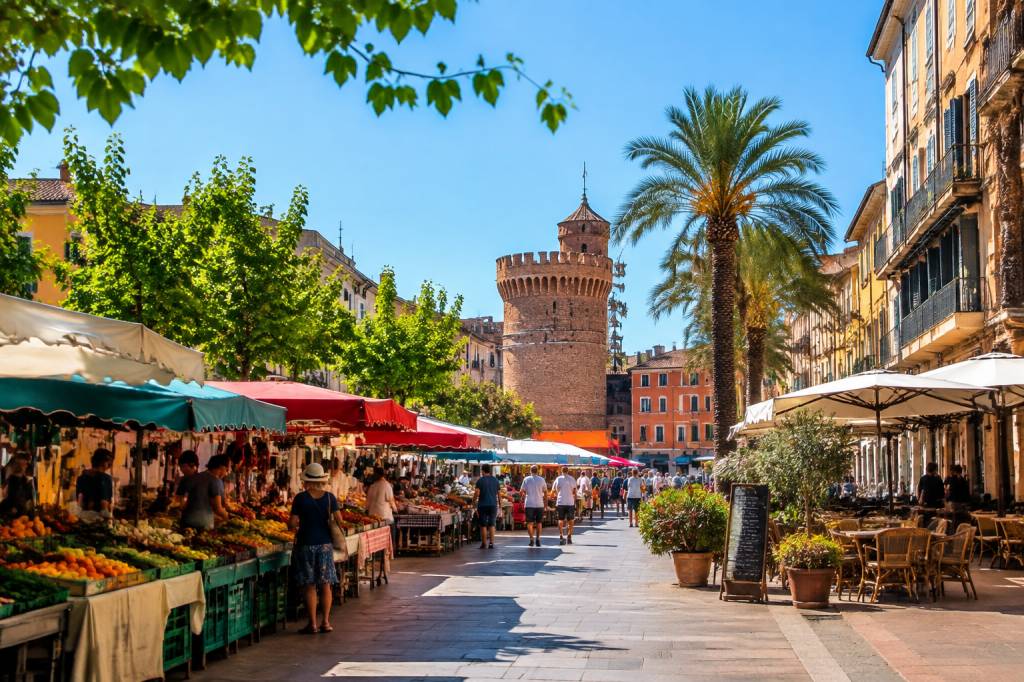
Perpignan is the kind of city that rewards a slower pace. Set between the Mediterranean coast and the Pyrenees, this sunny corner of southern France has a distinctly Catalan personality, colourful streets, lively markets and plenty of excuses to pause for lunch. It feels French, Spanish and proudly local all at once.
For travellers who enjoy mixing sightseeing with shopping, good food and easy day trips, Perpignan makes an excellent base. You can spend the morning wandering through historic lanes, pick up fresh produce at a market, and be on the beach by the afternoon. Not bad for a city break.
Here is my guide to making the most of Perpignan, from its prettiest streets and best local markets to Mediterranean escapes just a short journey away.
Why visit Perpignan?
Perpignan sits in the Pyrénées-Orientales department, close to the Spanish border and only around 13 kilometres from the Mediterranean coast. Its location gives the city a warm, sunny climate and a wonderfully relaxed atmosphere. The influence of nearby Catalonia can be seen everywhere, from the red-and-yellow flag to the bilingual street signs and local dishes.
The city centre is compact enough to explore on foot, but varied enough to keep you interested. One moment you might be admiring a medieval gateway, and the next you are browsing independent boutiques or sitting beneath plane trees with a coffee.
Perpignan is also less polished and predictable than some of the Riviera’s better-known destinations. That is part of its charm. It feels lived-in rather than staged for visitors, with locals shopping for fruit, meeting friends for an aperitif and enjoying long lunches in the sunshine.
Start in the historic centre
The best way to discover Perpignan is to begin in the old town and let yourself wander. Place de la Loge is a natural starting point, surrounded by elegant buildings, cafés and restaurants. The square has long been one of the social centres of the city, making it an ideal place to sit with a coffee and watch daily life unfold.
From here, walk towards Le Castillet, the city’s most recognisable landmark. This red-brick gateway once formed part of Perpignan’s fortifications and now houses the Casa Pairal museum, which explores Catalan culture and local history. Climb to the top if you are happy with a few steps; the views across the rooftops are well worth the effort.
The narrow streets around the old town are full of character. Look out for pastel façades, wooden shutters, small galleries and traditional shops tucked between modern cafés. The area is particularly atmospheric in the morning, before the heat builds and the streets become busier.
Another essential stop is the Palace of the Kings of Majorca. Built in the thirteenth century, this impressive fortress-palace reflects the city’s important medieval role. Its courtyards and ramparts offer beautiful views over Perpignan and towards the Pyrenees on a clear day.
It is a place that makes you appreciate the city’s history without requiring a full day of intense museum-going. In other words, you can learn something and still have plenty of time left for lunch.
Sunny streets and local shopping
Perpignan is a lovely city for a relaxed shopping afternoon, especially if you prefer independent businesses to large shopping centres. The streets around the historic centre are lined with boutiques selling clothing, jewellery, homeware and locally made products.
Rue des Marchands is a good place to browse, while the streets around Place de la République offer a mix of cafés and smaller shops. You will find plenty of French labels, but also businesses with a Catalan influence and products inspired by the colours of the region.
For something distinctive to take home, look for:
- Catalan ceramics and colourful tableware.
- Local wines from the surrounding vineyards.
- Traditional woven fabrics and espadrilles.
- Olive oil, honey and regional preserves.
- Handmade soaps scented with lavender or Mediterranean herbs.
- Local sweets, biscuits and chocolate for the journey home.
Perpignan is also a good place to shop for picnic supplies. A fresh baguette, ripe peaches, cheese and a bottle of local wine can easily become one of the best meals of your trip. Add a shady spot by the river or a beach nearby and you have a very convincing argument against eating indoors.
Markets worth making time for
Markets are at the heart of daily life in Perpignan, and they are one of the easiest ways to experience the city’s Catalan-Mediterranean character. Arrive early for the best choice and to see the stalls at their most lively.
Les Halles Vauban is a popular indoor food market where you can browse fresh produce, seafood, cheese, meat and prepared dishes. It is also a useful option when the weather is too warm for a long walk or when you simply want to sample several things in one place.
Depending on the day, you may find oysters, charcuterie, local vegetables, pastries and regional specialities being served alongside wine or coffee. The atmosphere is informal and sociable, so do not be surprised if a quick visit turns into a leisurely lunch.
Outdoor markets are held in different parts of the city throughout the week. The Saint-Martin area and the neighbourhood around Place Cassanyes are particularly good for finding fresh produce and everyday local shopping. Dates and locations can change, so check the latest information locally before planning your morning around a specific market.
When shopping at a market, take your time. Ask where products come from, try something you have not seen before and do not be afraid to point at a cheese or pastry and ask for a recommendation. A little curiosity often leads to the best discoveries.
What to eat in Perpignan
The food in Perpignan reflects its location between France, Catalonia and the Mediterranean. Expect bold flavours, fresh ingredients and dishes that are ideal for sharing.
Boles de picolat is one of the region’s traditional specialities. These meatballs are usually served with white beans, olives and a rich sauce. It is comforting, filling and especially welcome after a day of exploring.
Other local treats to look out for include cargolade, a Catalan-style snail dish traditionally cooked outdoors, and fuet, a thin cured sausage that makes a very good picnic addition. Sweet-toothed visitors should try rousquilles, delicate ring-shaped biscuits often flavoured with lemon or anise.
Seafood is another obvious choice, particularly if you are travelling towards the coast. Fresh fish, mussels, oysters and prawns are widely available, while Mediterranean vegetables appear on menus in colourful salads, tarts and grilled dishes.
For lunch, look for a restaurant offering a formule du midi. These set menus often provide much better value than ordering à la carte and may include a starter, main course and dessert. Remember that lunch in southern France is rarely something to rush. If your afternoon plans are ambitious, perhaps do not order three courses with wine and coffee. Or do. You are on holiday.
A taste of Catalan culture
Perpignan’s Catalan identity is not simply a decorative detail. It shapes the city’s language, architecture, food and festivals. You may hear both French and Catalan spoken, and local events often celebrate traditions shared across the border with Spain.
The city has strong links with Catalonia, and this cultural connection is visible in everything from market produce to music and public celebrations. If you visit during a festival or local fête, expect colourful costumes, dancing, live performances and plenty of food.
The Hôtel Pams is another fascinating place to visit. This former private mansion has beautifully decorated interiors and offers a glimpse into the wealth and artistic ambition of nineteenth-century Perpignan. It is easy to miss if you are only following the main tourist route, which makes it feel like a particularly rewarding discovery.
Art lovers may also want to explore the Musée d’art Hyacinthe Rigaud, which houses works ranging from old masters to modern artists. The collection brings together regional history and wider French artistic movements, making it a useful stop if you want a break from the sunshine.
Easy escapes to the Mediterranean coast
One of Perpignan’s biggest advantages is how close it is to the sea. You can stay in the city and still enjoy a beach day without changing hotels.
Canet-en-Roussillon is one of the easiest coastal trips. Its long sandy beach, promenade and relaxed seaside atmosphere make it suitable for a simple day beside the water. Go early if you want a quieter stretch of sand, particularly during the height of summer.
Collioure is arguably the most picturesque option. Around half an hour to an hour from Perpignan depending on transport and traffic, this former fishing village is known for its colourful harbour, narrow streets and castle beside the sea. Artists including Henri Matisse and André Derain were drawn to its light, and it is easy to understand why.
Collioure can become very busy in summer, so consider visiting in the morning or later in the afternoon. Wear comfortable shoes, as the streets are hilly and often cobbled. The views from the coastal paths are beautiful, but bring water and sun protection.
Argelès-sur-Mer offers a longer beach and plenty of facilities, making it a practical choice for families or anyone wanting a classic seaside day. For a more dramatic landscape, head towards the Côte Vermeille, where rocky coves, vineyards and clear blue water create some of the most memorable scenery in the region.
Day trips beyond the city
There is more to explore around Perpignan than beaches. The area is rich in vineyards, mountain landscapes and historic villages.
Wine lovers can visit vineyards producing wines from the Roussillon region, including red, white, rosé and sweet fortified wines. Many estates offer tastings, but check opening times and book ahead where possible, especially during the busier months. If you are driving, nominate a non-drinking driver or arrange a guided tour.
The village of Castelnou is another worthwhile excursion. Listed among France’s beautiful villages, it has stone houses, narrow lanes and impressive views across the surrounding countryside. It is a small place, but perfect for a scenic stroll and a long lunch.
For history and dramatic scenery, consider the Cathar castles further inland. The journey takes longer, but the mountain-top ruins and sweeping views are unforgettable. Alternatively, Villefranche-de-Conflent combines fortified walls, medieval streets and access to the famous Little Yellow Train, which travels through the Pyrenees.
When to visit Perpignan
Summer brings the warmest weather and a full calendar of events, but it is also the busiest season. July and August are ideal for beach trips, although the midday heat can be intense. Plan sightseeing for the morning, take a long lunch, and keep the afternoon for shaded streets or the coast.
Spring and early autumn are excellent times to visit if you prefer comfortable temperatures and fewer crowds. Markets are still lively, restaurants are open and the landscape around the city can be particularly beautiful.
Autumn is also a wonderful season for food and wine, while winter offers a quieter version of Perpignan. You may not want to swim in the sea, but you can enjoy museums, cafés, markets and crisp walks without the summer rush.
Practical tips for a smoother trip
- Wear comfortable shoes. The old town is best explored on foot, with plenty of uneven streets and cobbles.
- Carry a reusable water bottle, particularly during summer.
- Book popular restaurants and coastal accommodation in advance during July and August.
- Check market days locally, as schedules may change during public holidays.
- Learn a few simple French phrases, and do not be surprised to see Catalan used as well.
- Use regional trains and buses for many coastal trips, but check the return timetable before setting off.
- Keep some flexibility in your itinerary. The best moments may involve an unplanned market stop or an extra coffee in a sunny square.
Perpignan may not always be the first city people mention when they dream of southern France, and that is precisely why it is worth discovering. It offers the colour and warmth of the Mediterranean, the character of Catalonia, genuinely good food and easy access to beaches, vineyards and mountain villages.
Come for the sunny streets and local markets, stay for the slow lunches and spontaneous detours. Perpignan is a city that does not demand to be rushed, and honestly, neither should your holiday.