


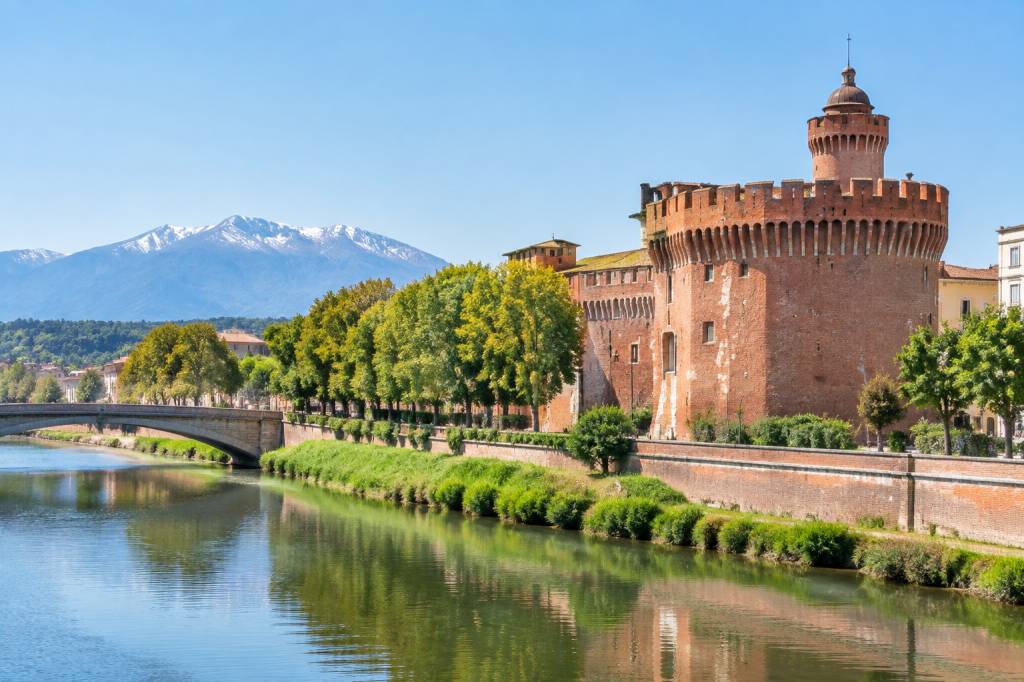
Perpignan is the kind of place that rewards curiosity. Tucked into France’s far south, just a short drive from the Spanish border and the Mediterranean coast, it has a personality all of its own. There are colourful markets, Catalan traditions, sun-warmed vineyards, mountain views and beaches where lunch can easily turn into dinner.
It is often overlooked in favour of Nice, Cannes or Montpellier, which is precisely why it feels so appealing. Perpignan offers the pleasures of the South of France without quite so much polish or pressure. Think slow lunches, lively squares, excellent wine and the occasional feeling that you have stumbled into a film set.
If you are planning a trip to this corner of France, here is my local-style guide to the best experiences in and around Perpignan.
Start with a wander through Perpignan’s historic centre
The best way to meet Perpignan is on foot. Begin around Castillet, the city’s famous red-brick gateway and one of its most recognisable landmarks. Built in the 14th century, it once formed part of the city’s fortifications and now houses a small museum dedicated to Catalan arts and traditions.
Climb to the top if your legs are feeling energetic. The views across the rooftops are well worth the effort, especially on a clear day when you can see towards the Pyrenees. From here, follow the narrow streets into the old town, where pastel façades, painted shutters and quiet courtyards create plenty of moments worth photographing.
Make time for the Cathedral of Saint John the Baptist, an impressive building with a distinctly Catalan feel. Nearby, the Campo Santo cemetery is an atmospheric place to pause. Its stone arches and peaceful cloisters make it feel far removed from the busier streets outside.
Perpignan is not a city that demands a strict itinerary. Leave room to get slightly lost. You may find a small independent boutique, a hidden wine bar or a shaded square where locals are enjoying an unhurried coffee. Those unplanned discoveries are often the most memorable part of a city break.
Enjoy the city’s Catalan character
Perpignan is French, but it is also unmistakably Catalan. The influence is visible in the architecture, language, food, festivals and strong sense of local identity. You will see the Catalan flag, hear the language spoken and find regional specialities that feel different from classic French cuisine.
For a taste of local life, visit Les Halles Vauban. This covered food market is a particularly good option if you enjoy travelling through your appetite. Pick up cheese, charcuterie, seafood, pastries or something from the prepared food counters, then settle down with a glass of wine. It is lively, sociable and ideal for a relaxed lunch.
Look out for Catalan dishes such as bunyetes, a type of sweet fritter, and boles de picolat, meatballs traditionally served with white beans and olives. You may also come across escalivada, a smoky salad of roasted vegetables, or ouillade, a hearty regional stew.
And then there is the wine. The surrounding Roussillon region is home to some wonderful reds, whites, rosés and sweet wines. If you enjoy a fortified wine, try a glass of Rivesaltes or Banyuls. The latter comes from vineyards closer to the coast and pairs beautifully with chocolate, blue cheese or a late-afternoon view over the sea.
Visit the Palace of the Kings of Majorca
Perched on a hill above the city, the Palace of the Kings of Majorca is one of Perpignan’s essential sights. Constructed in the 13th century, the palace was once the centre of the short-lived Kingdom of Majorca and reflects the area’s fascinating position between France, Spain and the wider Mediterranean world.
The complex is wonderfully atmospheric. Walk through the courtyards, visit the chapels and explore the grand halls before heading to the ramparts for panoramic views over Perpignan. On a bright day, the landscape stretches from the city towards the mountains and vineyards.
It is worth checking the events programme before visiting, as the palace regularly hosts concerts, exhibitions and cultural performances. A summer evening event here feels particularly special: ancient stone walls, warm air and music drifting across the city. Not a bad way to spend an evening at all.
Take a day trip to Collioure
Just under half an hour from Perpignan by car or train, Collioure is one of the prettiest destinations on the Mediterranean coast. It has colourful buildings, a small harbour, rocky coves and an artistic history that includes Henri Matisse and André Derain.
Start at the waterfront and explore the narrow streets behind the harbour. The town is compact, but there is plenty to see: the Royal Castle of Collioure, the Church of Notre-Dame-des-Anges and the old alleys filled with galleries and independent shops.
For the best view, walk up towards Fort Saint-Elme. The route is steep in places, so comfortable shoes are a sensible choice, but the view across the coastline is magnificent. You can also simply find a spot near the harbour, order something cold and watch the boats come and go. Both plans are entirely acceptable.
Collioure can become busy during the peak summer months, so arrive early or visit outside the middle of the day. Spring and early autumn are especially lovely, with softer light and a little more breathing space.
Make time for the Mediterranean beaches
Perpignan itself is inland, but the coast is close enough for an easy beach day. Canet-en-Roussillon is one of the most accessible options, with a long sandy beach, a lively promenade and plenty of cafés and restaurants.
If you prefer a quieter setting, head towards Le Barcarès or Sainte-Marie-la-Mer. These coastal towns offer long stretches of sand and a more relaxed atmosphere outside the height of summer. Pack a picnic, a large bottle of water and something to sit on. The Mediterranean sun is not known for being shy.
For a wilder landscape, explore the area around Leucate. Its lagoon, cliffs and beaches attract windsurfers and kitesurfers, but you do not need to be sporty to enjoy the scenery. A walk along the cliffs at sunset is one of the simplest and most beautiful experiences near Perpignan.
Swimming conditions vary depending on the time of year, and some beaches can become very windy. Check local information before heading out, particularly if you are travelling with children.
Explore the vineyards of Roussillon
Wine lovers will find plenty to enjoy around Perpignan. The Roussillon vineyards cover a varied landscape of rolling hills, dry valleys and slopes backed by the Pyrenees. The region is particularly known for powerful reds, aromatic whites, fresh rosés and sweet fortified wines.
There are several wine villages worth visiting, including Rivesaltes, Estagel, Maury and Banyuls-sur-Mer. Many local domaines welcome visitors for tastings, although it is best to book ahead, especially during harvest season.
A wine tasting here tends to be refreshingly informal. You may meet the winemaker, hear about the soil and weather, then sample a few bottles while looking across the vines. Ask about local grape varieties such as Grenache, Carignan and Macabeu. Even if you are not a wine expert, the experience is easy to enjoy.
If you are driving, remember that the tasting is not a challenge to see how many glasses you can manage. Choose a designated driver or book a guided tour. The wine will still be there, and the roads are much more enjoyable when everyone is safe.
Discover the Pyrenees and nearby villages
The landscape around Perpignan changes quickly. Within a short drive, you can move from Mediterranean beaches to vineyards, forests and mountain foothills. This makes the city a useful base for exploring the wider region.
Prades is a charming town at the foot of Mount Canigou, the symbolic mountain of Catalonia. It is known for its market, traditional buildings and proximity to beautiful walking routes. Nearby, the Abbey of Saint-Michel de Cuxa is a remarkable Romanesque site surrounded by peaceful countryside.
Another excellent outing is Villefranche-de-Conflent, a fortified medieval village listed among France’s most beautiful villages. Its stone walls, narrow lanes and mountain setting make it feel wonderfully cinematic. The famous Little Yellow Train also passes through the region, offering a scenic way to explore the Pyrenean valleys.
If you enjoy walking, there are routes for a range of abilities. Coastal paths around Collioure and the Côte Vermeille offer sea views without requiring a full day in hiking boots. Mountain trails are more demanding, so take proper footwear, check the weather and carry more water than you think you need.
Shop for local treasures
Perpignan is a good place to browse for things you will actually want to take home. Look for Catalan textiles, handmade ceramics, woven baskets, local soaps and bottles from nearby vineyards. Markets are ideal for edible souvenirs: honey, olives, spices, biscuits, nougat and regional preserves all travel well.
The old town has independent shops selling clothing, homeware and accessories, while larger shopping areas can be found around the city centre. If you are visiting on a Saturday, make time for a market and arrive with an appetite. Shopping is much more enjoyable when it includes a pastry break.
For a distinctive regional gift, consider a piece of linge catalan, the colourful striped fabric traditionally associated with Catalonia. It can be found as table linen, bags, cushions and other homeware. Practical, pretty and far more memorable than another airport magnet.
Eat like a local
Meals in Perpignan are rarely rushed, particularly when the weather invites everyone outside. Look for restaurants serving seasonal produce, seafood from the coast and wines from Roussillon. In summer, outdoor terraces become part of the experience rather than simply somewhere to sit.
Order a selection of small dishes to share, or try a traditional meal with seafood, grilled meat and regional vegetables. For dessert, seek out a pastry shop and sample local sweets alongside a strong coffee. A long lunch followed by a gentle walk through the old town is practically a Perpignan ritual.
When choosing somewhere to eat, move a few streets away from the most obvious tourist spots and look for places filled with local diners. Menus written on blackboards are often a good sign, as they tend to reflect what is fresh that day.
When to visit Perpignan
Summer brings long, hot days and a full calendar of festivals, but it is also the busiest season. July and August are ideal for beach time, although accommodation and popular restaurants can book up quickly.
Spring is excellent for exploring, with mild temperatures and flowers across the countryside. September and early October offer warm days, quieter beaches and the atmosphere of grape harvest season. Winter is cooler and some coastal businesses close, but the city remains pleasant for a cultural break and you will have many sights almost to yourself.
The famous Visa pour l’Image photojournalism festival takes place in Perpignan each year, usually around late summer and early autumn. It brings exhibitions and visitors from around the world, so book accommodation early if your trip coincides with the event.
Useful tips for your trip
Perpignan is a destination for travellers who enjoy a little bit of everything: history without heavy crowds, beaches without a glossy resort feel, excellent food, shopping with local character and landscapes that shift from sea to mountain in a remarkably short distance.
Give yourself time to slow down here. Browse the market, order another coffee, follow the road towards the coast or stop at a vineyard because the view looks inviting. In Perpignan, the best experiences are often the ones that were never on the original plan.