
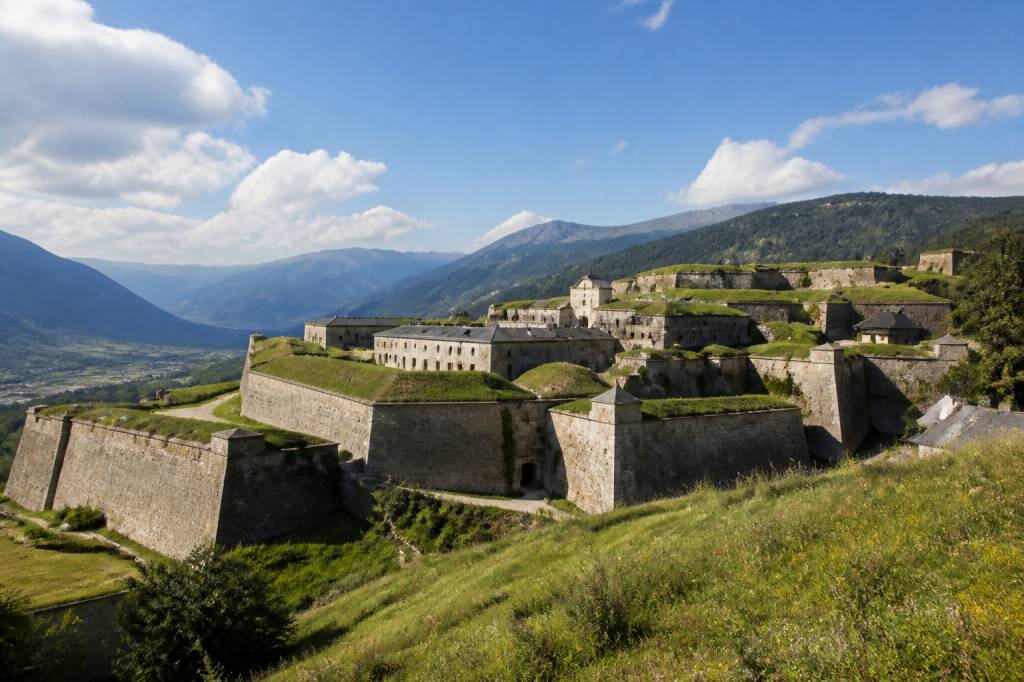
Perched high in the French Pyrenees, Mont-Louis is the kind of place that makes you slow down and look around. At more than 1,500 metres above sea level, it is one of France’s highest fortified towns, surrounded by mountain scenery, pine forests and wonderfully clear skies. It is also small enough to explore on foot, which makes it ideal for a relaxed weekend or as part of a longer Pyrenean adventure.
Mont-Louis is best known for its impressive military heritage, but there is much more to discover. You can wander through Vauban’s fortified town, visit an extraordinary solar furnace, hike through the surrounding landscapes, ride the famous Yellow Train and enjoy hearty Catalan-style food after a day outdoors. Here is my guide to the best things to see and do in Mont-Louis.
Why visit Mont-Louis?
Mont-Louis was built at the end of the 17th century on the orders of Louis XIV. The king wanted to strengthen France’s border with Spain, and his military engineer, Sébastien Le Prestre de Vauban, designed a fortified town that made excellent use of the natural landscape.
Today, Mont-Louis forms part of the Fortifications of Vauban, a UNESCO World Heritage Site. Unlike some historic fortresses that feel detached from everyday life, Mont-Louis remains a living town. People still live, work and eat within the walls, while the old military structures sit alongside cafés, shops and quiet streets.
The town is also a brilliant base for exploring the eastern Pyrenees. In summer, the area is popular with walkers, cyclists and families looking for fresh mountain air. In winter, nearby ski resorts bring visitors for snow sports and cosy evenings by the fire. And thanks to the high altitude, the views are spectacular in every season.
Explore the fortified town
The best way to begin your visit is simply to walk through the historic centre. Mont-Louis was designed as a military stronghold, so its layout is remarkably neat and purposeful. The streets are arranged around the central square, with defensive walls and gateways protecting the town from the surrounding slopes.
Take your time as you pass through the main entrance. The stonework, thick walls and carefully positioned openings give you a real sense of how difficult this fortress would have been to attack. It is easy to imagine soldiers moving through the town, although the peaceful mountain setting makes that history feel rather distant today.
The central square is a pleasant place to pause. Look out for traditional buildings, modest façades and the small details that are easy to miss if you rush. Mont-Louis is not a destination filled with grand monuments on every corner; its charm lies in the complete picture: the fortifications, the clean mountain light and the compact historic streets.
For the best atmosphere, visit early in the morning or later in the afternoon. The light catches the stone beautifully, and the town feels particularly calm before day-trippers arrive. Comfortable shoes are useful, especially if you plan to explore parts of the ramparts or combine your visit with a walk outside the walls.
Visit the Citadel and take a guided tour
Mont-Louis Citadel is still used by the French military, which means that access is limited. However, guided tours allow visitors to discover some of the most fascinating parts of the site.
A guided visit typically explains the design of the fortress, its defensive role and the everyday lives of the soldiers stationed there. You may see areas such as the church, wells, barracks and underground spaces, depending on the tour available during your visit. The guides bring the history to life with practical details rather than simply reciting dates: how supplies were stored, how the town was protected and why the location was strategically important.
Booking ahead is sensible, particularly during school holidays and the summer months. Tours may be offered in French, so check whether an English option or written information is available. Even if your French is limited, the architecture and atmosphere are rewarding, but a guided visit adds another layer to the experience.
One detail worth remembering is that Mont-Louis is not just a pretty old town with a few surviving walls. It was planned as a complete military settlement. The citadel, church, wells and surrounding fortifications were designed to work together, making the town an impressive example of 17th-century defensive architecture.
Discover the Solar Furnace
One of Mont-Louis’s most unexpected attractions is its solar furnace. It may sound like something from a science-fiction film, but the facility is a working research centre that uses the sun’s energy to create extremely high temperatures.
The solar furnace at Mont-Louis was established in the mid-20th century and uses mirrors to concentrate sunlight. The result is an intense beam of heat that can be used for experiments and demonstrations. Visitors can learn about solar energy, renewable technology and the science behind the system, often through visual displays and practical explanations.
This is a particularly good stop if you are travelling with children or if the weather is not ideal for hiking. It is also a reminder that Mont-Louis is not frozen in the past. The town combines military history with scientific innovation, which is a rather impressive contrast for such a small mountain destination.
Check opening times before setting off, as visits can vary depending on the season and scheduled demonstrations. The furnace is located close to the historic town, so it is easy to include in the same day as the citadel and a walk around the ramparts.
Walk along the ramparts and enjoy the views
Mont-Louis sits in a dramatic position above the surrounding valleys, so you do not need to climb a major peak to enjoy beautiful scenery. A stroll around the fortifications offers wide views of the Pyrenean landscape, with forests, ridges and distant summits stretching in every direction.
In clear weather, the views are especially impressive around sunrise and sunset. The mountains change colour throughout the day, from soft blue in the morning to warm gold in the evening. If you enjoy photography, bring a wide-angle lens or simply use your phone and be prepared to take far too many pictures.
There are also numerous walking routes in the surrounding area. Some are gentle woodland paths, while others are more demanding mountain hikes. Ask at the local tourist office for current route information, weather advice and details about trail conditions. Mountain weather can change quickly, even in summer, so a sunny morning should not be treated as a guarantee of a warm afternoon.
Pack water, sun protection and an extra layer. At this altitude, the sun can feel strong, while shaded paths and sudden wind can be surprisingly chilly. Sensible preparation makes the difference between a memorable walk and an afternoon spent wondering why you wore sandals.
Take a ride on the Yellow Train
The Yellow Train, or Train Jaune, is one of the most memorable ways to experience the Pyrenees. This distinctive railway connects Villefranche-de-Conflent with Latour-de-Carol, passing through mountain scenery, deep valleys, viaducts and tunnels along the way.
Mont-Louis–La Cabanasse is one of the stations used to visit the town. The train journey is not simply a form of transport; it is an attraction in its own right. The route climbs through the landscape and offers views that are difficult to appreciate from the road. In warmer months, some services include open-air carriages, which make the journey particularly enjoyable.
Seats can fill quickly during peak periods, especially when the weather is good. Check the timetable in advance and arrive early if you have a particular service in mind. The train can also be useful for planning a day trip to Villefranche-de-Conflent, another fortified town with its own Vauban heritage.
Allow plenty of time for the journey. Mountain railways are scenic rather than speedy, and that is exactly the point. Put your phone away for a while, watch the landscape unfold and enjoy one of the Pyrenees’ most charming travel experiences.
Enjoy outdoor activities in every season
Mont-Louis is a natural base for outdoor adventures. In spring and summer, the surrounding trails are ideal for hiking, trail running and cycling. The high plateau around the town features forests, open mountain landscapes and several nearby lakes.
Lac des Bouillouses is one of the area’s most popular natural attractions. The lake sits in a beautiful mountain setting and provides access to a range of walking routes, from relatively easy paths to longer hikes towards higher peaks. During busy periods, access by car may be restricted, with shuttle services operating instead, so check local arrangements before travelling.
Winter brings a completely different atmosphere. Ski resorts near Mont-Louis, including the areas around Les Angles and Font-Romeu, offer downhill skiing, snowboarding and other snow activities. Font-Romeu is also known for its high-altitude sports facilities and sunny climate, while Les Angles combines skiing with a traditional mountain-village feel.
If you prefer something less energetic, snowshoeing is a wonderful way to explore the landscape at a slower pace. Local guides and activity providers can advise on routes and equipment. As always, conditions in the mountains should be taken seriously, and it is worth checking forecasts before leaving the marked paths.
Try local food and Catalan specialities
After a day in the fresh mountain air, you will probably be ready for something substantial. Food in the region reflects both French and Catalan influences, with plenty of warming dishes designed for cooler weather.
Look for local cheeses, cured meats, mountain honey and artisan bread. In restaurants, you may find hearty stews, grilled meats, potatoes, mushrooms and dishes featuring regional produce. Catalan specialities such as boles de picolat, a traditional meatball dish, may appear on menus in the wider area, while mountain restaurants often serve generous plates suited to hungry hikers and skiers.
For a relaxed meal, choose a small local restaurant rather than expecting a long list of international options. Mont-Louis is a destination for simple, satisfying food rather than fashionable dining trends. A warm dish, a local dessert and a glass of regional wine can feel like exactly the right reward after exploring the fortress.
It is also worth checking market days in nearby villages. Local markets are a good place to pick up cheese, fruit, preserves and picnic supplies for a day beside a lake or on a mountain trail.
Where to stay in and around Mont-Louis
Staying within Mont-Louis gives you the chance to experience the town once the day visitors have left. The streets become wonderfully quiet in the evening, and the stone walls take on a different character under the soft light.
Accommodation ranges from small hotels and guesthouses to self-catering apartments and holiday rentals in nearby villages. If you are visiting in summer or during ski season, book ahead, particularly if you want to stay inside the fortified town itself.
Font-Romeu is another practical base, with a wider choice of accommodation, restaurants and outdoor activity providers. Les Angles is a good option for visitors focusing on skiing or family-friendly mountain activities. Staying outside Mont-Louis can also make sense if you are travelling by car and planning to explore several parts of the Cerdanya and Capcir regions.
Practical tips for visiting Mont-Louis
- Getting there: Mont-Louis is in the Pyrénées-Orientales department, close to the Spanish and Andorran borders. Driving is often the easiest option, although the Yellow Train provides a memorable alternative for part of the journey.
- Best time to visit: Summer is ideal for hiking and sightseeing, while winter is popular for skiing and snow activities. Spring and autumn are quieter, but some attractions and services may operate reduced hours.
- Allow enough time: A full day is enough for the main sights, but two or three nights allow you to enjoy the surrounding walks, villages and railway journey without rushing.
- Check opening times: Guided tours, the Solar Furnace and seasonal transport services may have different schedules throughout the year.
- Prepare for altitude: Temperatures can be cooler than expected, and the sun is strong. Bring layers, water, sunglasses and sun cream.
- Wear suitable shoes: Even a short sightseeing visit can involve uneven ground, stone surfaces and slopes.
- Respect the landscape: Stay on marked paths, take rubbish with you and follow local advice, particularly around protected natural areas.
Make Mont-Louis part of a Pyrenean escape
Mont-Louis may be compact, but it offers an unusually rich mix of history, science, scenery and outdoor adventure. You can spend the morning exploring a UNESCO-listed fortress, the afternoon learning how sunlight becomes a source of intense heat, and the next day travelling through the mountains on the Yellow Train. Not bad for a small town high in the Pyrenees.
Whether you visit for a weekend of fresh air or use it as a base for exploring the wider region, Mont-Louis rewards curious travellers. Take time to walk its quiet streets, look beyond the walls and let the mountain landscape set the pace. Sometimes the most memorable destinations are not the ones with the longest list of attractions, but the ones that make you want to stay just a little longer.


More Stories
Perpignan south of France: a guide to sunny streets, local markets and Mediterranean escapes
South of France Perpignan: a local guide to the region’s best experiences
Moret-sur-Loing France: a charming day trip from Paris