
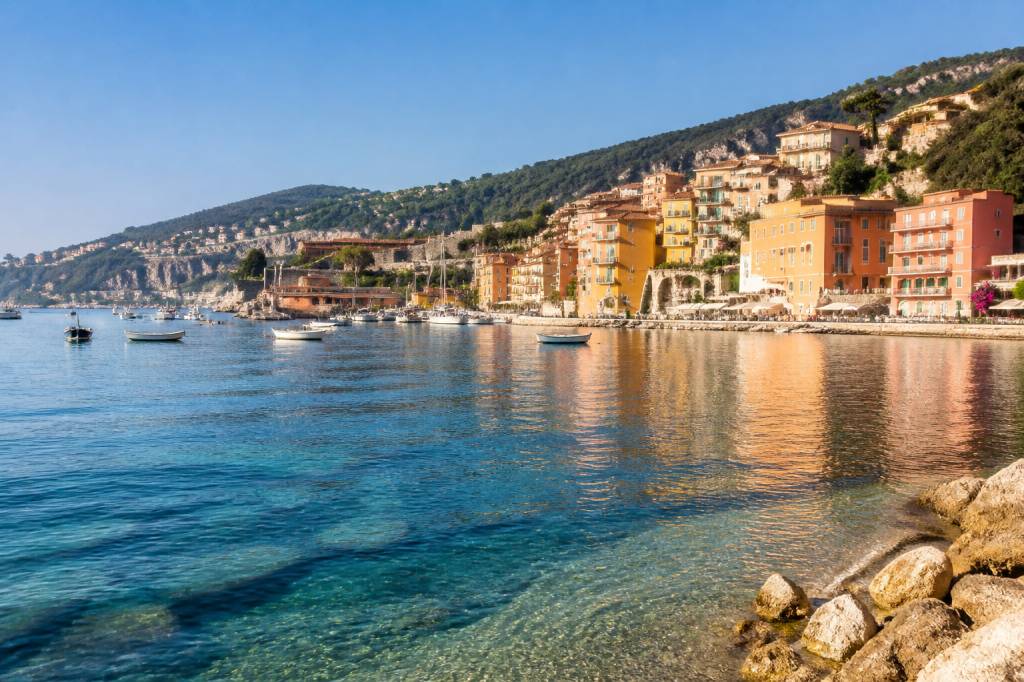
There is something effortlessly irresistible about the south of France. Perhaps it is the Mediterranean light, the scent of lavender warming in the sunshine, or the promise of long lunches that somehow turn into early evening drinks. From glamorous coastal towns to hilltop villages and beautiful cities packed with history, this part of France offers plenty more than a beach holiday.
Whether you are planning a stylish weekend in Nice, a road trip through Provence or a relaxed escape on the French Riviera, choosing where to go can feel like the hardest part. So, where should you visit in the south of France? These are some of the best places to add to your itinerary, along with a few practical tips to make your trip even more enjoyable.
Nice: the perfect starting point
Nice is one of the easiest and most rewarding places to begin exploring the south of France. It has an international airport, excellent train connections and a mix of city energy, seaside glamour and old-world charm.
Start with a stroll along the Promenade des Anglais, the famous waterfront boulevard stretching beside the Baie des Anges. You can walk, cycle or simply find a blue chair and watch the world go by. The sea is particularly beautiful in the morning, when the water seems to change from turquoise to deep blue.
Behind the promenade, the narrow streets of Vieux Nice are full of colourful buildings, small boutiques and cafés. The Cours Saleya market is a must-visit, especially if you enjoy browsing local produce, flowers and Provençal gifts. Pick up some socca, a savoury chickpea pancake that is a speciality of Nice, and enjoy it while wandering through the old town.
For one of the best views in the city, climb to Castle Hill. The original castle has disappeared, but the viewpoint remains, offering a wonderful panorama across Nice and the coastline. It is a little effort for a lot of scenery, which is generally my favourite kind of sightseeing.
- Best for: food, beaches, shopping and easy transport links.
- Do not miss: Cours Saleya, Castle Hill and the old town.
- Ideal stay: two to three nights.
Antibes: art, beaches and old-town charm
Just a short train ride from Nice, Antibes feels more intimate and relaxed. The old town is surrounded by historic ramparts, and its cobbled streets are filled with independent shops, restaurants and market stalls.
Art lovers should visit the Musée Picasso, housed in the Château Grimaldi. Picasso worked here for a time, and the building has a spectacular position overlooking the sea. Even if modern art is not usually your thing, the setting alone makes the visit worthwhile.
Antibes also has several lovely beaches. Plage de la Gravette is close to the old town and is convenient for a quick swim, while the beaches around Cap d’Antibes offer a quieter atmosphere. For a scenic walk, follow part of the coastal path around the Cap. The views are beautiful, although comfortable shoes are a much better idea than fashion trainers that have never met a hill.
The nearby town of Juan-les-Pins is known for its sandy beaches and lively summer atmosphere. It is a good option if your idea of the French Riviera involves sunshine, sea swims and evenings spent outdoors.
Cannes: glamour with a softer side
Cannes is famous for its film festival, luxury hotels and red-carpet reputation, but there is more to the city than designer labels and celebrity sightings. The palm-lined Croisette is ideal for a glamorous stroll, while the sandy beach clubs make it easy to enjoy the Mediterranean in style.
For a different perspective, head up to Le Suquet, the oldest part of Cannes. Its steep streets lead to a viewpoint overlooking the harbour and the Croisette. The area has a more traditional feel, with small restaurants and pretty squares that are particularly atmospheric in the evening.
If you have time, take a boat trip to the Lérins Islands. Île Sainte-Marguerite is the larger of the two main islands and is known for its pine forest, clear water and peaceful walking trails. It is also home to Fort Royal, where the mysterious Man in the Iron Mask was held. History, nature and a boat ride in one afternoon sounds like a very good holiday plan to me.
Cannes is also a useful base for exploring other Riviera destinations, including Antibes, Grasse and Saint-Paul-de-Vence.
Saint-Paul-de-Vence: a hilltop escape
Saint-Paul-de-Vence is one of the most beautiful medieval villages in the south of France. Perched on a hill between Nice and the mountains, it has attracted artists, writers and visitors for decades.
Walk through the fortified entrance and you will find stone lanes, flower-filled corners, art galleries and small courtyards. The village is compact, so it can be explored in a few hours, although you may want longer if you enjoy browsing artwork and local crafts.
The views from the ramparts stretch across the surrounding countryside, and the village has a wonderfully romantic atmosphere late in the day. Visiting early in the morning or towards the evening is a smart choice during the busiest summer months, as the narrow lanes can become crowded during the middle of the day.
Nearby Vence is less touristy and worth considering if you want to see another charming Provençal town. The Chapelle du Rosaire, designed by Henri Matisse, is one of its main cultural highlights.
Monaco and Menton: eastern Riviera highlights
Although Monaco is technically an independent principality, it is easy to include on a south of France itinerary. The train journey from Nice takes around half an hour, and the views along the coast are excellent.
Monaco is known for its superyachts, casino and Formula One circuit, but you can also visit the old town, see the Prince’s Palace and explore the Oceanographic Museum. The famous Monte Carlo Casino is worth seeing even if gambling is not on your holiday agenda. Dressing up for a glamorous evening is optional, although it does make a trip to Monte Carlo feel especially fun.
Further east, Menton is a quieter and more colourful alternative. Located close to the Italian border, it has a distinct Italian influence, pastel-coloured buildings and a warm microclimate. The old town rises above the waterfront, and the gardens are among the prettiest on the Riviera.
Menton is also celebrated for its lemons. Look out for lemon-flavoured sweets, tarts and drinks, or plan your visit around the annual Lemon Festival in February if you fancy something wonderfully unusual.
Saint-Tropez and the Var coast
Saint-Tropez has a legendary reputation for glamour, but the town still retains its old fishing-port character. The harbour is lined with cafés and restaurants, while the old quarter has narrow lanes and small squares perfect for an unhurried wander.
For shopping, you will find everything from local markets and espadrilles to luxury boutiques. The Place des Lices market is held several times a week and is a good place to browse Provençal textiles, fresh produce and holiday souvenirs.
The beaches outside the town are a major attraction. Pampelonne Beach is the best known, with a mixture of stylish beach clubs and quieter stretches of sand. During the height of summer, traffic around Saint-Tropez can be frustrating, so travelling by boat from nearby towns is often a more relaxing option.
If you want a less famous but equally attractive coastal experience, look at Sainte-Maxime, Port Grimaud or the beaches around Le Lavandou. These destinations offer beautiful scenery without quite as much celebrity sparkle.
Aix-en-Provence: elegant city living
Aix-en-Provence is ideal if you want a city break with a distinctly Provençal feel. It is elegant, walkable and full of fountains, leafy streets and café terraces.
The Cours Mirabeau is the city’s grand boulevard and a lovely place to sit with a coffee. From here, explore the old town, where you will find independent boutiques, bakeries and restaurants tucked into historic buildings. The markets are excellent, particularly for cheese, fruit, herbs, ceramics and other local specialities.
Aix also has strong connections with the artist Paul Cézanne. You can visit his studio, follow parts of the Cézanne trail and admire the landscapes that inspired his work. For a walk outside the city, head towards Montagne Sainte-Victoire, which appears in many of his paintings.
The city works well for a long weekend, but it is also a convenient base for exploring the wider Provence region. It is close enough to Marseille, Arles and several famous lavender areas to make day trips possible.
Marseille: lively, historic and full of character
Marseille is one of the most interesting cities in southern France. It can feel rougher around the edges than Nice or Aix-en-Provence, but that is part of its appeal. It is energetic, multicultural and packed with history.
The Old Port is the natural place to begin. Fishing boats and yachts sit alongside restaurants serving bouillabaisse, Marseille’s famous fish stew. From the port, walk through Le Panier, the city’s oldest neighbourhood. Its colourful streets are filled with murals, small shops and cafés.
Notre-Dame de la Garde sits on the hill above the city and offers spectacular views across Marseille and the Mediterranean. You can walk up, take a bus or use the petit train if you prefer to save your energy for lunch.
Another highlight is the MuCEM, a striking museum dedicated to the civilisations of Europe and the Mediterranean. The building itself is impressive, and the rooftop footbridge connects it with Fort Saint-Jean.
For nature and swimming, take a boat or bus towards the Calanques National Park. These dramatic limestone coves have clear water and beautiful walking routes. Check access restrictions before visiting in summer, as high temperatures and wildfire risk can lead to closures.
Avignon and Arles: culture in Provence
Avignon is one of the best places to visit if you enjoy history and architecture. The Palais des Papes dominates the city and is one of the largest medieval Gothic buildings in Europe. The famous Pont d’Avignon, or Pont Saint-Bénézet, is another essential stop, particularly if you know the French song about dancing on the bridge.
The city has a lively arts scene, especially during the annual theatre festival in July. Outside the busiest festival dates, Avignon is easier to explore and makes a good base for discovering vineyards and Provençal villages.
Arles has a different but equally compelling atmosphere. Its Roman amphitheatre, ancient theatre and Romanesque buildings reflect a long and fascinating history. Vincent van Gogh lived in Arles for a time, and several locations around the city are linked to his paintings.
Arles is also a gateway to the Camargue, a unique natural region known for wild horses, pink flamingos, wetlands and traditional ranches. A day trip here offers a completely different view of southern France and is particularly memorable for wildlife lovers.
Provence villages and the lavender fields
No guide to the south of France would be complete without mentioning the villages and landscapes of Provence. Gordes, Roussillon, Lourmarin and Ménerbes are among the most beautiful places to visit, with stone houses, hilltop views and colourful markets.
Gordes is especially striking, rising dramatically above the Luberon valley. Roussillon is famous for its red and orange ochre cliffs, while Lourmarin has a relaxed, stylish atmosphere and an attractive château.
Lavender usually flowers from late June to early August, depending on the weather and location. The Valensole Plateau is one of the best-known areas for endless purple fields, but you will also find beautiful lavender around Sault and the Luberon.
If you are driving through Provence, allow time for spontaneous stops. A tiny village café, a roadside stall selling apricots or a viewpoint found by accident can easily become one of the highlights of the trip.
Useful tips for planning your trip
The south of France is best explored at a pace that leaves room for long lunches and unexpected detours. Trains are excellent along the Riviera, connecting Nice with Antibes, Cannes, Monaco and Menton. A car becomes more useful in Provence, particularly if you want to visit hilltop villages, lavender fields and countryside markets.
- Visit in May, June, September or early October for warm weather and fewer crowds.
- Book accommodation and popular restaurants well ahead for July and August.
- Wear comfortable shoes, especially in hilltop villages and historic old towns.
- Carry water during summer walks, particularly around the Calanques and coastal paths.
- Try local specialities such as socca, ratatouille, bouillabaisse, tapenade and lavender honey.
- Pack a light cover-up for churches, cool evenings and air-conditioned trains.
For a first visit, a combination of Nice, Antibes, Aix-en-Provence and a few Provençal villages gives you a wonderful balance of coast, culture, food and scenery. If you have longer, add Marseille, Avignon or Saint-Tropez to create a more varied itinerary.
The south of France is not really a destination you tick off a list. It is better enjoyed slowly: a morning swim, a market visit, a scenic train journey and dinner outside beneath warm evening skies. And if you return home already planning your next trip, that simply means you have been doing it properly.

More Stories
Best places to visit in the south of France for an unforgettable holiday
Best places to visit in South of France for an unforgettable holiday
Mont-Louis travel guide: things to see and do