
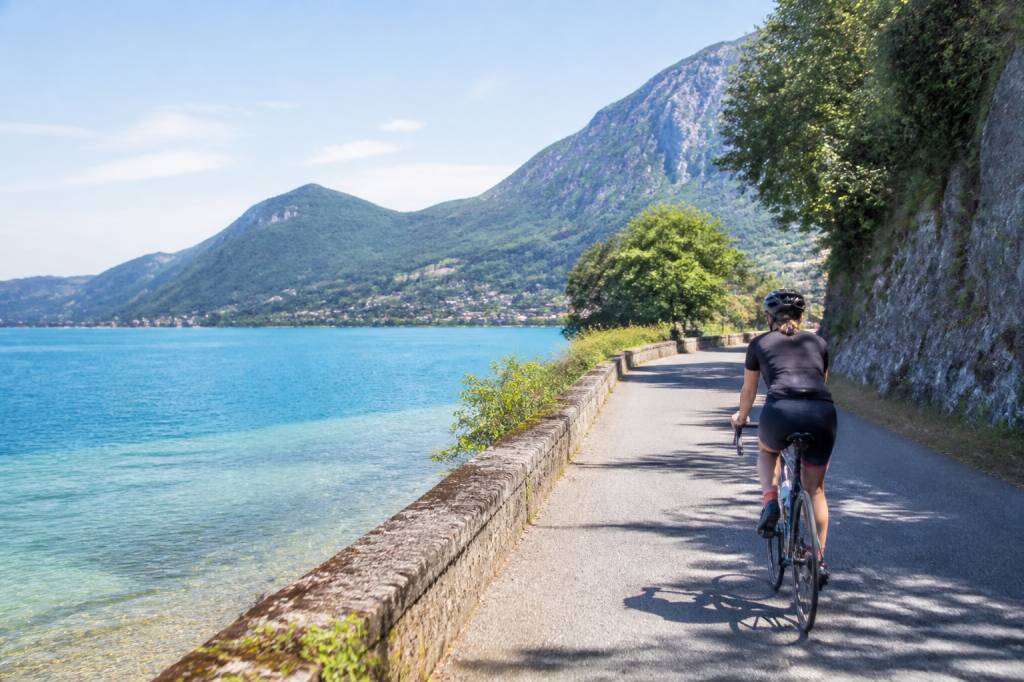
There are scenic bike rides, and then there is cycling around Lake Annecy. With turquoise water, dramatic Alpine peaks, flower-filled villages and a wonderfully smooth cycle path, this is one of those day trips that makes you wonder why every journey cannot involve a bicycle and a mountain view.
The full route around the lake is roughly 40 kilometres, depending on exactly where you start and which little detours you take. It is mostly straightforward, making it suitable for confident beginners, families with older children and anyone who prefers admiring the scenery rather than battling up endless hills. There are a few climbs, particularly on the eastern side, but nothing that should spoil the fun if you take your time.
Here is everything you need to know for planning the ultimate Lake Annecy cycle route, including where to hire a bike, the prettiest stops, useful food breaks and a few practical tips that will make your day much smoother.
Why cycle around Lake Annecy?
Lake Annecy is often described as one of the cleanest lakes in Europe, and its clear blue-green water certainly looks the part. The lake is surrounded by the Bauges and Bornes mountain ranges, so the views change constantly as you ride. One moment you are passing a peaceful beach; the next, you are looking up at sheer cliffs and snowy peaks.
The route also follows a former railway line for part of the way, which has been transformed into a dedicated greenway. This makes the western shore particularly enjoyable because you can cycle away from busy roads and concentrate on the scenery, your picnic and the very important question of where to stop for ice cream.
Unlike a demanding mountain cycling challenge, this is a ride where the journey itself is the main attraction. You can complete the circuit in a few hours if you cycle continuously, but allowing a full day is far better. You will want time for photographs, swimming, lunch and at least one unnecessary but completely justified pastry stop.
Choosing your starting point
Annecy town is the most popular starting point, and it is an excellent choice if you are staying nearby or arriving by train. The historic centre, with its canals, pastel buildings and cobbled lanes, is beautiful, although it can be busy. It is usually easier to collect your bike just outside the most crowded old-town streets before joining the lakeside path.
Another convenient option is to start at Veyrier-du-Lac, on the eastern shore. This gives you immediate access to the more challenging side of the route and allows you to finish with the flatter western section. Talloires and Doussard are also practical starting points if you are staying south of the lake or prefer a quieter beginning.
If you are hiring bikes, reserve them during the summer months. Electric bikes are especially popular, and for good reason. The eastern shore includes some rolling sections, so an e-bike can turn a potentially tiring day into a relaxed sightseeing adventure. It also leaves more energy for exploring the villages rather than dramatically negotiating with a hill.
The route at a glance
- Distance: approximately 40 kilometres for the full circuit
- Time: around 3 to 5 hours of cycling, or a full day with stops
- Difficulty: easy to moderate, with some uphill sections
- Best for: leisure cyclists, families with older children and e-bike riders
- Surface: mainly paved cycle paths and quiet roads
- Best season: late spring to early autumn
The route is signposted in places, but it is still worth downloading an offline map or using a cycling app. The path is generally easy to follow, although you may occasionally need to share the road or navigate through a village. Google Maps can be useful for checking cafés and beaches, while dedicated cycling apps can show the gradient and route variations.
Annecy to Sévrier
Starting in Annecy, head south along the western shore towards Sévrier. This is one of the easiest and most enjoyable sections, with a largely flat cycle path and lovely views across the lake towards the mountains.
As you leave the town behind, the atmosphere becomes noticeably calmer. The path passes beside the water and through green spaces, making it tempting to stop every few minutes. The views are particularly beautiful in the morning when the lake is often calm and the mountains are reflected on the surface.
Sévrier is an ideal first pause. You will find cafés, restaurants, a beach and places to sit by the lake. If you have started early, this is a good spot for coffee and a croissant. If you have started later, it may be time for an early lunch. There is no wrong answer when food is involved.
Families may enjoy stopping at Sévrier beach for a swim, although remember that the water can feel surprisingly refreshing, even on a warm day. The lake is wonderfully inviting, but it does not always share the same definition of “warm” as the average British traveller.
From Sévrier to Saint-Jorioz and Doussard
Continue south through Saint-Jorioz, one of the prettiest places along the western side of the lake. The village has a relaxed, residential feel and is a useful place to stock up on water or picnic supplies. Its lakeside area is perfect for a longer break, with grassy spaces and peaceful views.
This stretch includes sections of the greenway that follow the old railway route. The surface is smooth and separated from traffic, so it is particularly pleasant for less experienced cyclists. There are also occasional viewpoints where you can pull over safely for photographs.
As you approach Doussard, the landscape becomes more rural. The southern end of the lake feels quieter and less polished than Annecy, which is part of its appeal. Look out for wetlands and birdlife around the nature reserve at Bout-du-Lac. It is not directly on every version of the cycle route, but it is a worthwhile detour if you have time and enjoy walking as well as cycling.
Doussard is a sensible lunch stop. You can choose between a restaurant meal, a bakery picnic or something packed before setting off. A lakeside picnic of local cheese, fresh bread, fruit and pastries is difficult to improve upon, particularly when the view comes free.
The southern tip and the climb towards Talloires
At the southern end of the lake, the route turns towards the eastern shore. This is where the scenery becomes especially dramatic, with the Roc de Chère and surrounding mountains creating a striking backdrop.
The road between Doussard and Talloires includes some sections shared with traffic, so stay alert and follow local signs. It is not usually difficult, but it can feel more demanding after several hours in the saddle. This is another point where an electric bike earns its keep.
Talloires is arguably one of the most beautiful stops on the entire route. The village sits beside a small bay and has a more elegant, holiday atmosphere, with stone buildings, flower-filled streets and excellent restaurants. It is a wonderful place to pause for a drink or a late lunch.
If you have time, walk down towards the waterfront and enjoy the view from the harbour. The lake here often looks intensely blue, particularly in bright sunshine. Talloires can be busy in peak season, so locking your bike securely and keeping valuables with you is sensible.
Exploring Menthon-Saint-Bernard
From Talloires, continue north along the eastern shore towards Menthon-Saint-Bernard. This is one of the most scenic parts of the ride, although it also includes more undulating terrain and sections where you may need to share the road.
Menthon-Saint-Bernard is known for its picturesque village and fairytale-like château perched above the lake. The Château de Menthon-Saint-Bernard dates back many centuries and looks as though it has been designed for a storybook film set. If it is open during your visit, it is worth adding a tour to your itinerary, although allow extra time because the full cycling circuit already makes for a busy day.
The village itself is a good place for refreshments. Cafés and restaurants provide plenty of choice, but prices can be higher in the most popular lakeside locations. If you are travelling on a budget, carry snacks and simply stop for a coffee or cold drink while enjoying the view.
Veyrier-du-Lac and the final stretch
Continue towards Veyrier-du-Lac, a lively lakeside village with beaches, cafés and spectacular views across the water. This is a popular swimming stop, so pack swimwear somewhere easy to reach rather than burying it beneath a rain jacket, picnic and emergency snacks.
The route from Veyrier-du-Lac back to Annecy can be busier, particularly during weekends and the summer holidays. Use the cycle lanes where available, signal clearly and take extra care at junctions. If everyone in your group is tired, there is no shame in shortening the route or using a local bus or taxi for part of the journey. A scenic day out should not end with a family argument about who ignored the map.
As you approach Annecy, the views open out once again and the lake begins to feel more urban. Return your bike, then reward yourself with a wander through the old town. The canals, bridges and narrow streets are especially atmospheric in the late afternoon, when many visitors are settling down for dinner.
What to pack for the ride
- A refillable water bottle, as the sun can feel strong even when the air is cool
- Sun cream, sunglasses and a cap or cycling helmet
- A light waterproof jacket for changing Alpine weather
- Comfortable cycling clothes and padded shorts for longer rides
- A small repair kit, even if your rental company provides roadside assistance
- Snacks such as fruit, cereal bars or local pastries
- Swimwear and a lightweight towel
- A phone, portable charger and offline route map
- Cash or a card for cafés, beach entry and small village shops
Always wear a helmet, especially on the eastern shore where traffic and gradients can be less predictable. Check the brakes, tyres and gears before leaving the rental shop. It takes two minutes and is much better than discovering a problem halfway around the lake with a mountain on one side and no repair shop in sight.
When is the best time to cycle Lake Annecy?
Late spring and early autumn offer a lovely balance of pleasant weather and fewer crowds. May, June and September are often ideal, although conditions can change quickly in the mountains. July and August bring the warmest weather and excellent swimming conditions, but the cycle path and lakeside villages can become busy.
Set off early if you are visiting in high summer. You will enjoy cooler temperatures, quieter paths and softer light for photographs. Morning is also the best time to find a peaceful spot by the water before the beaches fill up.
Check the weather forecast before leaving, but do not rely on it completely. Alpine weather has a personality of its own. A sunny morning can turn cloudy later in the day, so a light waterproof layer is always a sensible addition.
Extra tips for a memorable day
Do not treat the route as a race. The beauty of Lake Annecy is in the details: a wooden jetty, a tiny beach, a mountain reflected in the water or a village bakery selling something you definitely did not plan to buy.
If you are travelling with children, consider completing only the western section from Annecy to Doussard and back. It is flatter, more protected from traffic and still delivers many of the best lake views. Families may also prefer hiring trailers, child seats or cargo bikes in advance.
For couples, an early morning ride followed by lunch in Talloires makes a lovely day. For friends, an e-bike circuit with swimming stops and a late meal in Annecy is an easy-going way to explore the area. Solo travellers will appreciate how simple the main route is to follow, although it is wise to tell someone your plans and keep your phone charged.
Lake Annecy is the kind of destination that rewards a slower pace. You can arrive with a route planned down to the last kilometre and still end up stopping for an hour because the water looks too inviting to ignore. That is not a failure of organisation. It is simply the correct way to cycle around one of France’s most beautiful lakes.

More Stories
Best city in south of France for an unforgettable getaway
Where to visit in the south of France: a guide to the best places
Best places to visit in the south of France for an unforgettable holiday